
Making insurance renewal
actually happen.
Renewal existed in the app. Almost no one used it. We built a flow that actually worked.
- Role
- Product Designer · End-to-end
- Team
- 1 PM · 3 Engineers · Ops
- Timeline
- ~8 weeks
- Scope
- Renewal experience — start to finish
- Constraints
- No existing flow · Ops was the default · Low user trust · Tight engineering scope
- Outcome
- Built from zero. Ops became the backup.
There was no renewal flow.
We built one.
Renewal existed in the app — but not really. Users who needed to renew called support. An agent walked them through it over the phone. No in-app flow, no deadline visibility, no clear path forward.
"The job wasn't 'renew policy'.
It was: help me avoid lapse
without making a mistake."
What we learned
from users.
20 interviews, ops shadowing, funnel analysis. The problem wasn't behaviour — it was the product.
-
Trust Gap
Users called ops because the app never gave them a reason to trust it. Ops felt safer than a UI they'd never needed to rely on.
-
Buried Entry
The renewal entry point required 3 taps to find. Most users only discovered it when ops told them where to look.
-
No Urgency
85% waited until R11. The system created no deadline visibility and no cost to waiting. So users waited.
-
Broken Flow
Ops had become the default renewal channel. The app wasn't competing with ops — it had already lost.
Four directions.
One worked.
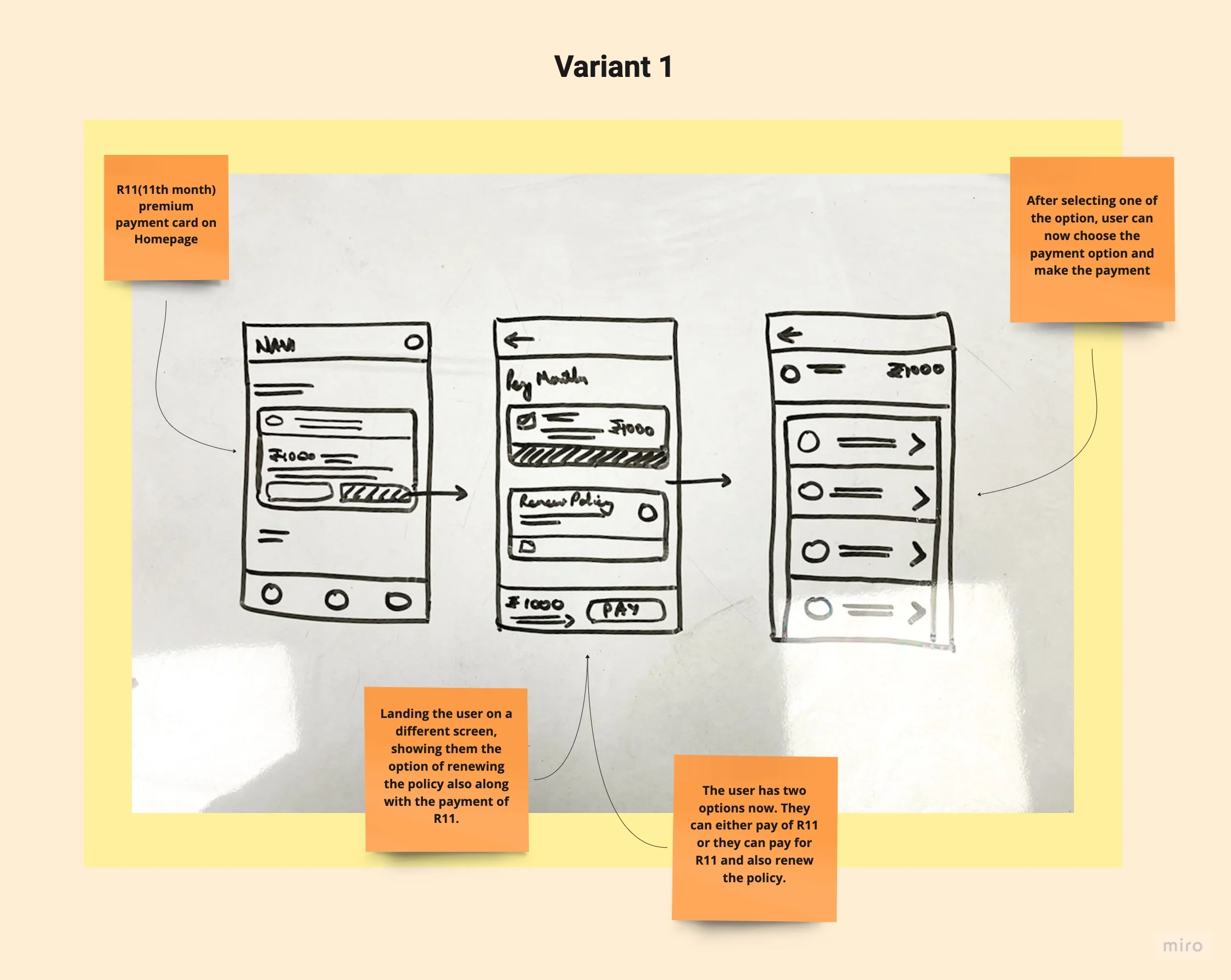
Information-first
Tried showing more details upfront.
Users ignored them and still didn't renew.
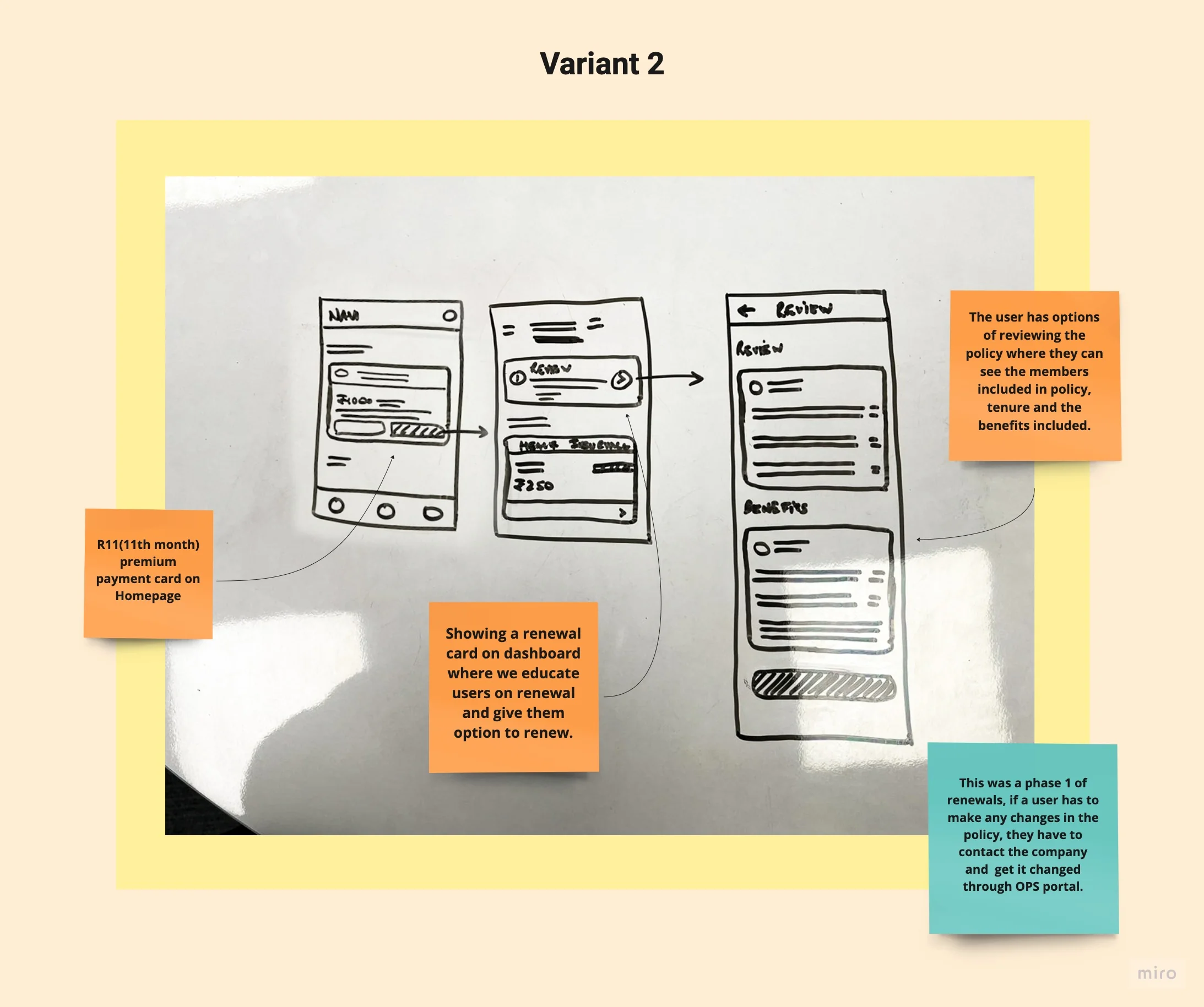
Step-by-step reveal
Tried revealing information progressively to reduce anxiety.
More screens meant more drop-off. Didn't build trust.
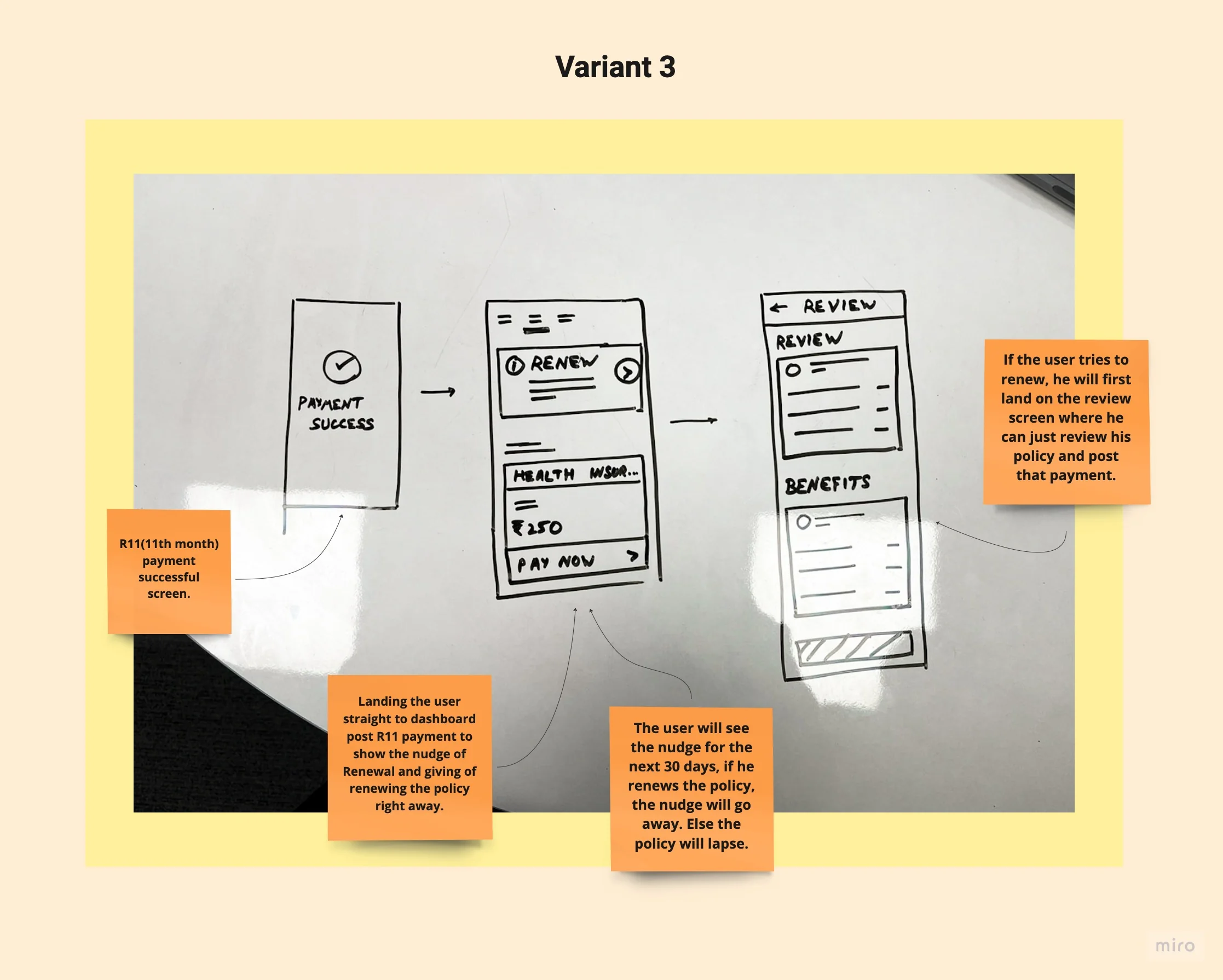
Nudge-first
Tried pushing users to renew earlier.
You can't nudge people into a flow that doesn't work.
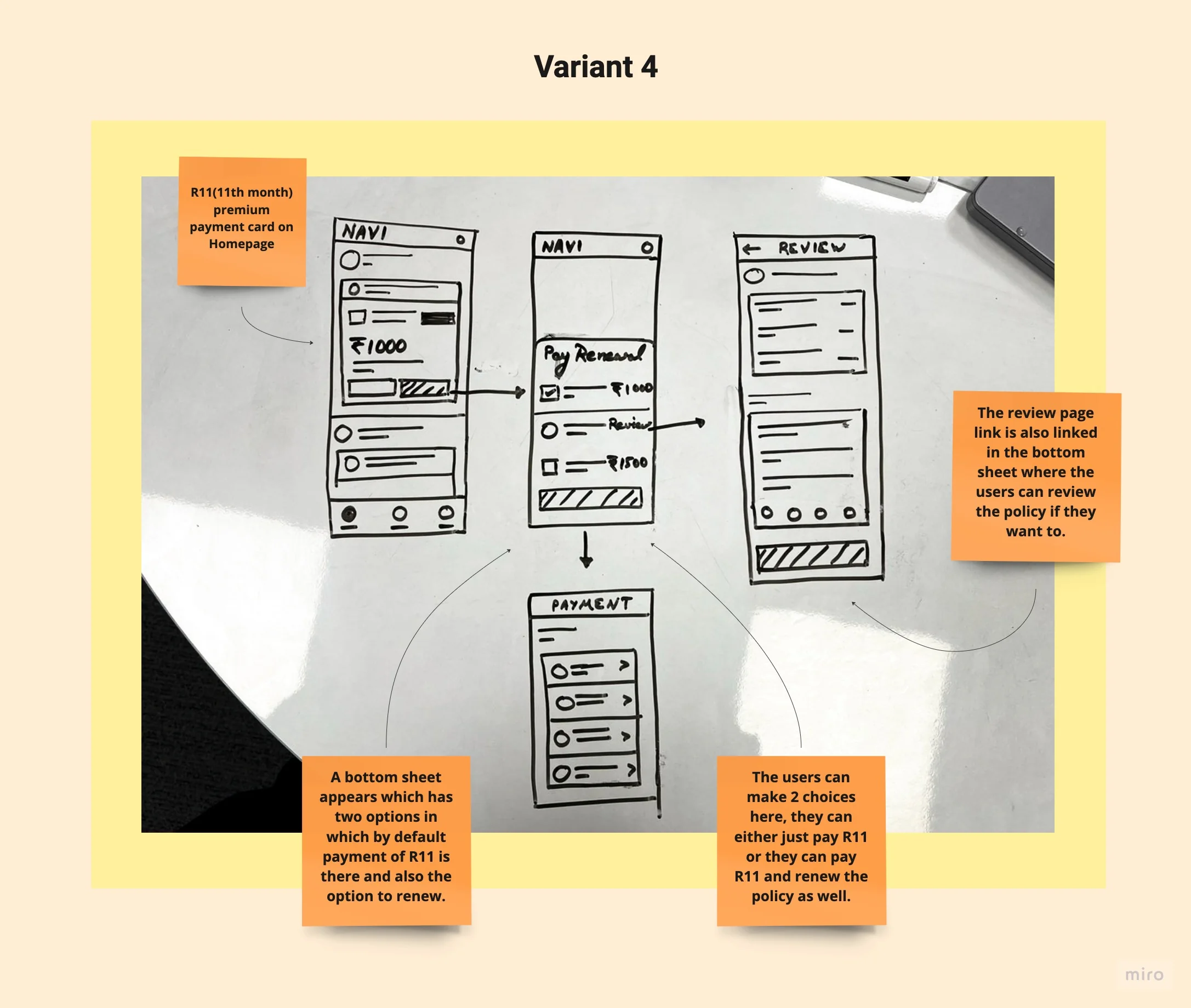
Clarity-first
One screen. Clear status. Minimal steps.
Fastest to complete. Easiest to build. Clearest for users.
Reviewed with PM and engineering. V4 was the only direction all three could commit to.
What we built.
Visible
Surfaces 45 days before expiry
Understandable
Clear policy details upfront
Complete
End-to-end inside the app
Supported
Comms that guide users in
Shipped flow — recorded from the live Navi app.
- No renewal flow in the app
- Users called ops to renew
- No deadline visibility
- Renewal visible 45 days before expiry
- Complete in under 2 minutes
- No call needed
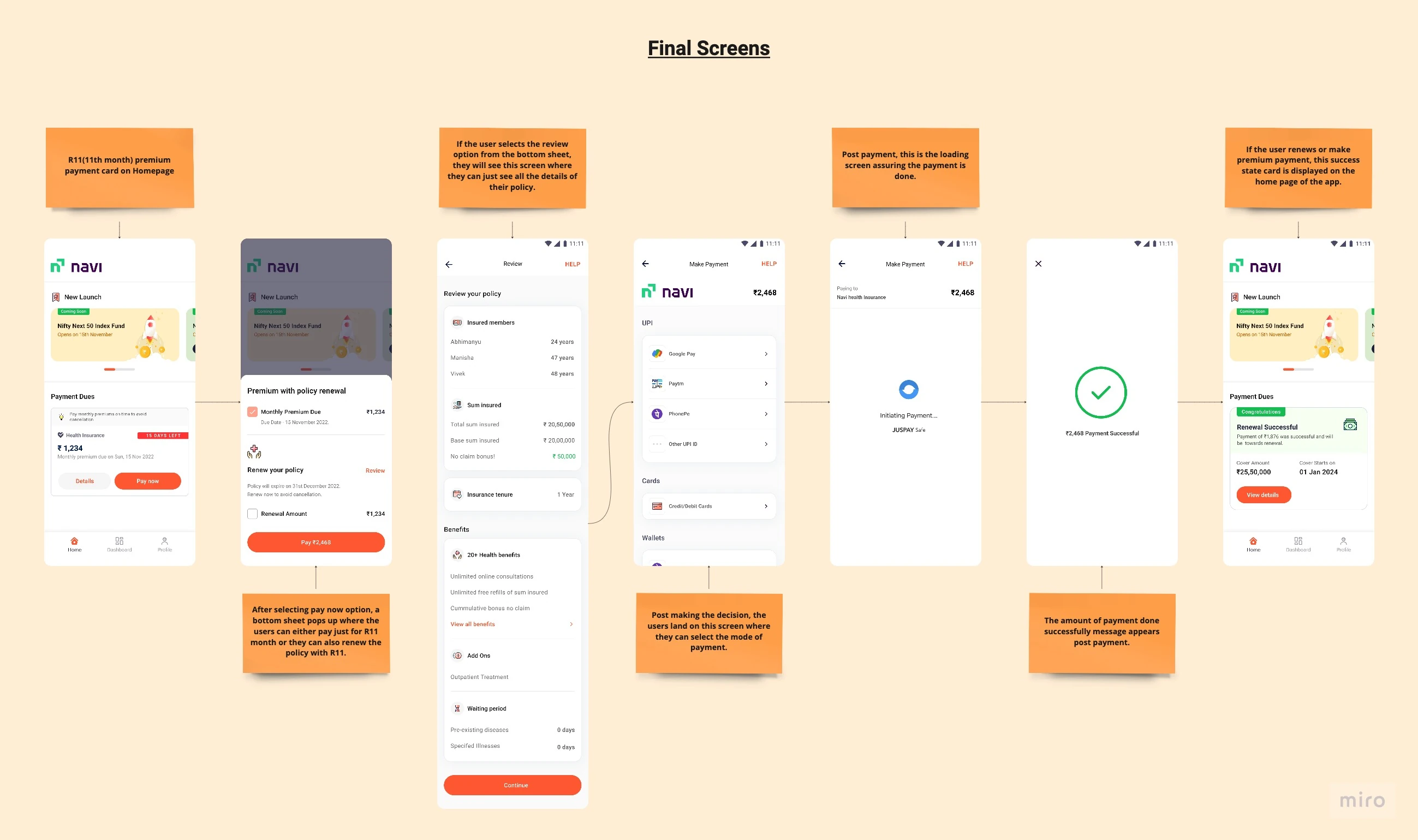
Final shipped design — the renewal entry point inside the Navi app.
The simplified flow was also the easiest to build. Engineering sign-off came fast.
What we chose.
And why.
The numbers
moved.
48%
After95%
+47pp In-app renewals<12%
After40%
~3× growth Early renewals- Renewal became predictable — users knew what to expect
- Users completed it alone, without calling anyone
- Ops became the backup. Not the default.
Three things this
project taught me.
-
Insight 01
In financial products, the interface has to feel safe before users will act in it.
-
Insight 02
Progressive disclosure slows people down when they just want to get something done.
-
Insight 03
Skipping the nudge layer at launch was the right call. Real data beats assumptions every time.
"When the app works, users don't call.
They just renew."